
We mainly consume 4 types of coffee beans. The Arabica type of bean is the most consumed all over the world. In this article, you will learn about these 4 types (Arabica, Robusta, Liberica, Excelsa) of coffee beans. Their discovery, recognition, which one is good for your health, harvesting methods, which ones you should consume, and all about coffee beans in this one article.
1- Arabica Bean
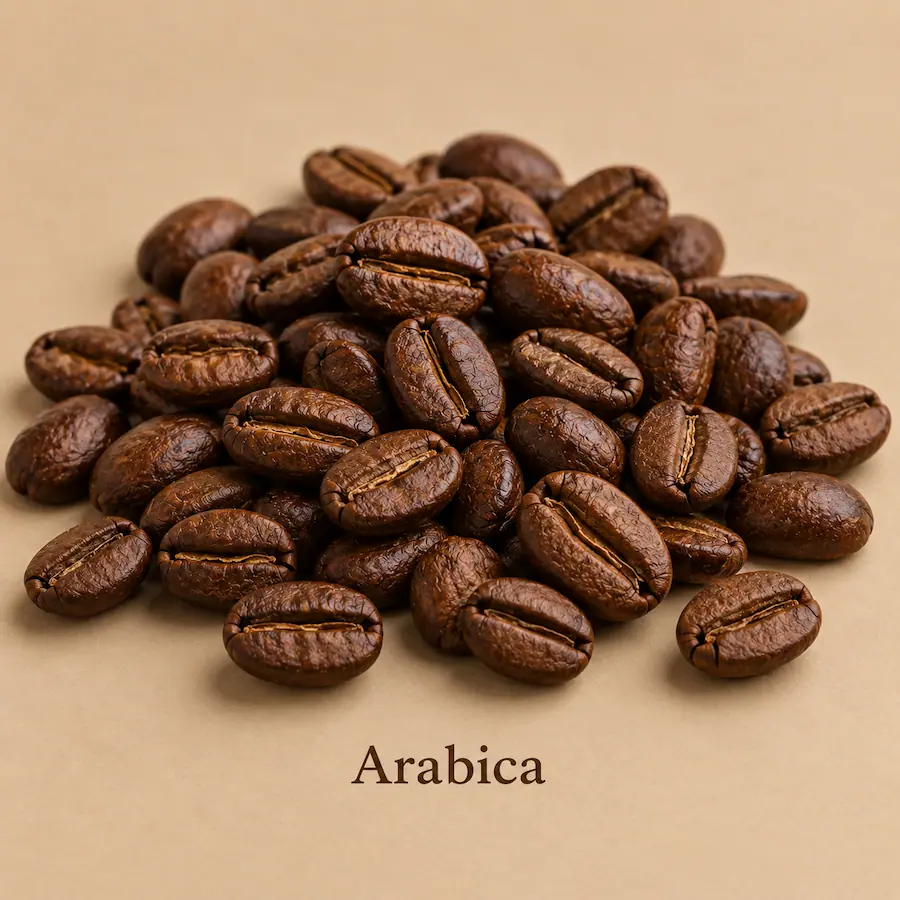
Arabica coffee beans, also known as Coffea Arabica. It accounts for around 60% of total global production and consumed and produced in the most regions. The bean originated in Ethiopia in the Kaffa region. From there, it began to spread to the rest of the world through Yemen.
Cultivation of Arabica Bean
- Arabica takes about 6-7 years to mature fully, but can mature in as little as 9 months.
- Arabica thrives best at altitudes between 1200- 1500 m and 800- 2000 m above sea level.
- The average temperature that Arabica beans require is 15 to 24c
- Arabica beans mostly grow in Tropical regions. It is the best weather for growing Arabica plants.
- Arabica beans require an average temperature of 15 to 24 °C.
- It requires high altitudes and a more stable climate. It’s a delicate plant with high demands for soil and climate.
Characteristics of Arabica Bean
Harvest– Arabica beans are harvest by hand-picking when they turn into bright, deep-red cherries, and reach their peak ripeness.
Each cherry picked individually. Each cherry contains two beans. They are removed from the fruit and dried before roasting. For a clean taste, use either the cleaned (washed) method or the sun-drying method for whole cherries.
Shape– The shape of Arabica beans is slightly stretched, oval, and with an ‘S’-shaped curve from the top center to the bottom.
Taste– Complex and sweeter compared to the other beans. Naturally has a taste of fruit, chocolate, berries, caramel, and nuts.
Sugar– It contains around 6-8% sugar by dry weight.
Caffeine– Arabica beans contain 1.8- 1.4% caffeine. Less bitter than Robusta.
Price– Due to its difficult cultivation and high quality, it works out to be a bit expensive.
Health Effect– It’s known for its fine acidity. It has Vitamin E and B, magnesium, potassium, proteins (around 8-12%), and carbohydrates (up to 50% in dried green beans)
Arabica bean develops a lower risk of type 2 diabetes, dementia, and Alzheimer’s. It also contains antioxidants and phytonutrients, which have anti-inflammatory impacts.
Arabica Producing Country – Major growing regions are Brazil (the world’s largest producer), Colombia, Honduras, and Costa Rica.
In Africa, they are grow in Ethiopia, Kenya, Rwanda, and Tanzania.
In Asia, countries like India ( In South areas like Karnataka), Indonesia, China, Laos, and Thailand.
Unknown Facts– Arabica plants pollinate themselves. They use their own pollen for reproduction.
One plant makes one pound of coffee.
One pound of coffee contains around 8000 coffee beans.
It has been highly recommend for weight loss and hydration when it is taken with water.
2- Robusta Bean
The origin of the Robusta coffee bean is considered to be in central and western Africa. It is a type of flowering plant in the family of Rubiaceae. The plant is known as Coffea Canephora, which has two varieties: Robusta and Nganda.
It produces around 40 -45% of the global coffee production. It is known for it’s highly prized for traditional Italian espresso blends and high-energy brews. It is mostly used for instant coffee.
The Robusta plant grows as a robust tree which is around 10meters. It has a shallow root system and a better crop yield than Arabica beans.
Cultivation of Robusta Bean
Robusta plants demand lower altitudes (200- 800 meters above sea level). Required warm, humid conditions and temperatures between 20 to 30c to grow fully mature. Robusta plants require 1500- 3000 annual rainfall with deep and fertile soil.
Harvest- it usually takes 9 to 11 months to blossom properly. The cherries take longer to mature than Arabica beans. I required major labour units, as it is a critical process and takes longer time to harvest.
Only red cherries picked, leaving the green branches behind to mature. The bean set in sunlight for several weeks to dry completely. Technical equipment’s are used to harvest easily and quickly.
Shape– Robusta beans are usually small, round, and have a straight cut in the centre.
Taste– It has a rich, strong, and pleasant bitter taste with an earthy flavour.
Caffeine– Typically around 2.1- 2.7%, which is double than Arabica.
Sugar– It contains less sugar (3-7%) than Arabica.
Price– Robusta Coffee is cheaper than Arabica beans. It is affordable in both growing and purchasing.
Health Effect– It contains a high level of antioxidants and chlorogenic acid that help boost energy. It maintains health benefits such as lower blood pressure and a higher metabolism. It contains nearly double the caffeine of Arabica, which improves attention, focus, and energy.
Important Tip– As Robusta coffee has a high level of caffeine, drinking too much can cause a fast heart rate, anxiety, and sleep issues.
Producing Countries: It is mostly grow in Vietnam. It is the world’s largest exporter of Robusta coffee. It is grow in Africa, India, Brazil, Indonesia, Uganda, Thailand, Malaysia, and Cameroon.
3- Liberica Bean
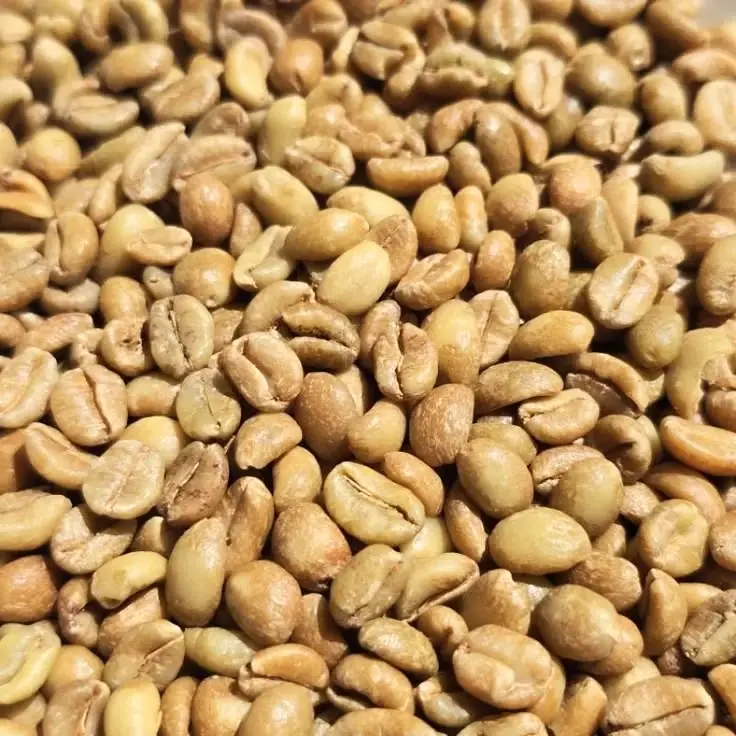
Liberica is the third coffee bean after Arabica and Robusta, but it only accounts for 1% of the global production. The origin of Coffea liberica, or Liberica, is considered to be Liberia, but it also covers wild areas of western and central Africa and countries like Uganda, Colombia, the Philippines, and Malaysia.
Cultivation of Liberica Bean
It usually requires hot, humid, and well-draining soils. It needs a constant rainfall environment. Liberica plants are usually very tall, around 20ft. And harvest through ladders. It requires minimum 50% temperature in winters. It mostly prefers morning sunlight.
Taste– It has a smoky, woody, fruity (ripe jackfruit, cocoa, and berries) and slightly sweet aftertaste.
Shape– Teardrop-shaped and double the size of an Arabica bean.
Caffeine– 25% less caffeine than Arabica. (1.1- 1.4%)
Price– More expensive due to its rarity
Use– Mostly used for French Press, Pour-Over, Espresso and niche coffee.
4- Excelsa Bean
One of the less-recognized coffee varieties, Excelsa, discovered in the 20th century in Africa. It counted as one of the species of Liberica. However, it is exceedingly rare compare to Arabica and Robusta.
Excelsa coffee beans are also grow commercially in the Philippines and Vietnam, as well as in some parts of South Asia (India). With its distinctive taste and limited production, it has grown popular in recent years among coffee devotees.
Cultivation of Excelsa Beans
It grows at lower altitudes between 1000- 1300 m above sea level. Its plants are large and wide. Its flowers bloom many times throughout the harvest season and can take up to one year for full maturation. It has larger flowers and leaves than Arabica and Robusta.
Harvest– Excelsa coffee is usually harvest by hand. Farmers pick up each cherry individually to ensure optimal quality. After harvesting, they pass through various methods, like washed or processed by honey. Each method is use to enhance the final flavour and make it more distinct.
Taste– It provides a complex and exotic flavour, which makes it different from other varieties. It has a flavour of fruit, tart, and spicy undertones.
Shape– Round and smaller in size.
Caffeine– Lower than Arabica and Canephora. (0.86- 1.13%)
Price– Excelsa is considered expensive due to its low supply and production. It contains less than 1% of the commercial trade.
Use– Brewing methods can be use like French press, pour-over and cold brew.
Health Effect– Excelsa trees help prevent many common diseases and pests, such as trichomycosis, a fungal disease.
Final Thoughts
There are more than 120 coffee bean species has been discovered, but these 4 are the most produced and consumed beans among all of them. Due to their different types of taste and supply, these beans have gained popularity in the world and are now grow in every corner of the continents. These beans pass through multiple processes and methods like harvesting, roasting, and brewing before they pour into our cup.
They go through many phases: each cherry is picked by hand, cultivated with proper care, and take quiet long time to convert a flower into a cherry. However, each bean has its own taste and is famous precisely for the specialities that make it different from the others.
Let’s wrap up this blog here. It was all about coffee beans. If you have any queries, feel free to drop a message to coffeewithpreeti. Read other coffee-related blogs here!